Aranjuez as a Bel Canto Electronic Dance Track:
“Mon Amour”( A Rose under the Desert Sky )
There are currently three versions of the Adagio from Aranjuez sung with French lyrics: Aranjuez, Mon Amour, with lyrics by the versatile French artist and musician Guy Bontempelli; Aranjuez Ma Pensée, a poem by Rodrigo’s wife, Victoria Kamhi; and Mon Pays C’est La Terre, with lyrics by the French pop singer Hélène Ségara. Each of the three songs has its own artistic character, but the first, Aranjuez, Mon Amour, is by far the most widely circulated and most frequently covered.
The French lyrics Bontempelli wrote in 1967 transformed Rodrigo’s originally wordless music into a poem about love, memory, and loss. In the twenty-first century, however, Aranjuez, mon amour underwent a very different transformation: it left behind the traditions of French chanson and the pop ballad and entered a realm where electronic music, dance music, and world music merge. The most distinctive example is Mon Amour (My Love), a “French-English hybrid version” that combines the original French lyrics with new English words.
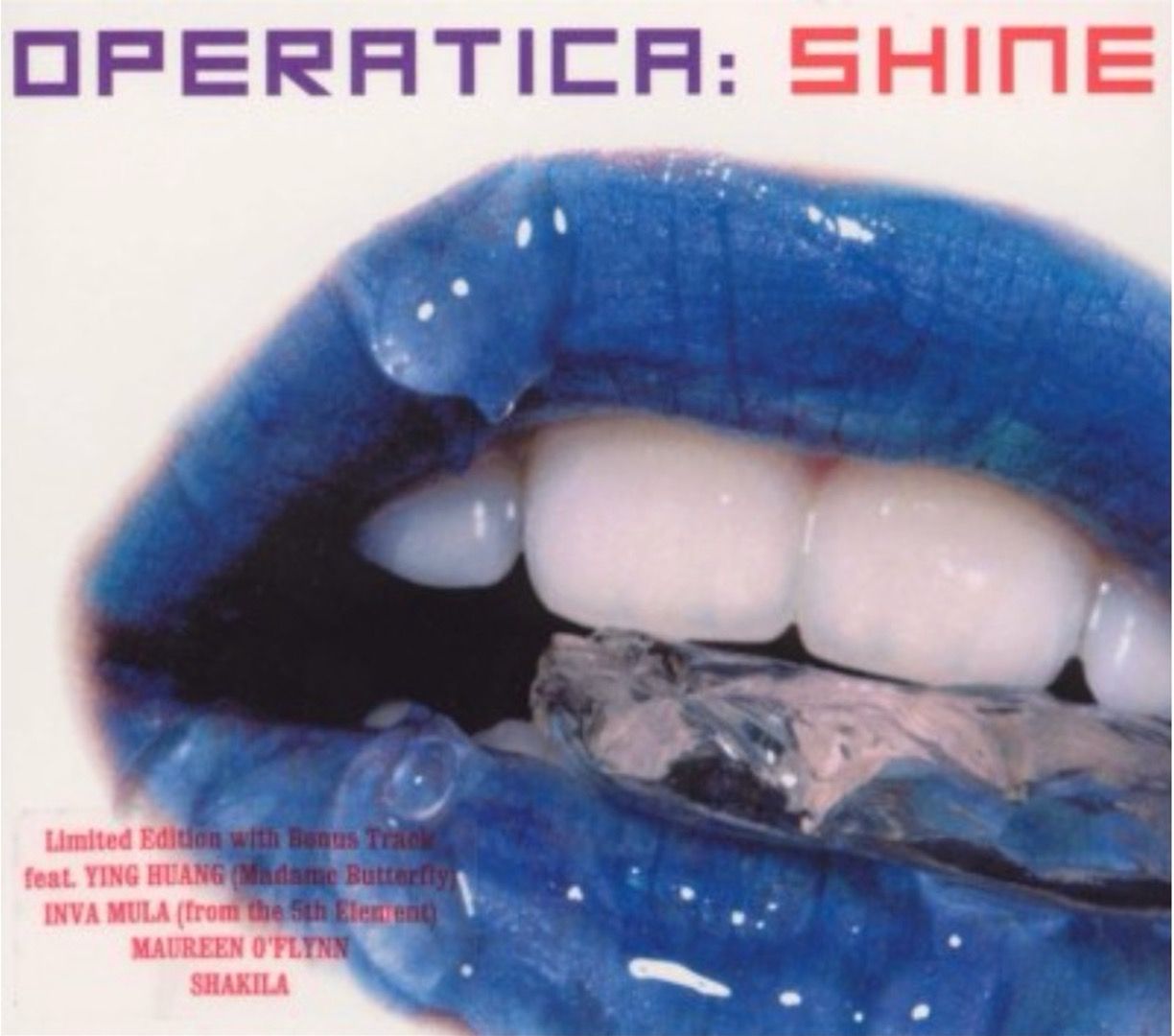

In 2002, the British-born musician Lord Vanger released his second album, Operatica: Shine. Its track Mon Amour offers yet another wonderfully creative interpretation among the many arrangements of the Adagio from Aranjuez.
Lord Vanger uses parts of Guy Bontempelli’s French lyrics for Aranjuez, mon amour, preserving both their poetic haze and the romantic, sorrowful imagery of the original music, while adding line after line of heartbreaking English lyrics. Operatic soprano Inva Mula’s voice is at times gentle and tender, at times pensive, and at times rises into piercing, heart-rending high notes. A touch of exotic Middle Eastern color occasionally enters as well. The electronic rhythms strike the body and soul, yet they do not make you dance—they make you weep. Through this arrangement, mixing, and vocal artistry, “Aranjuez,” having moved from classical music to jazz, and then from French chanson into the popular world of twenty-first-century electronic music.
In 2003, “Mon Amour” was included in the renowned lounge-music compilation Buddha-Bar V, bringing it to a wider audience in the global electronic crossover market.
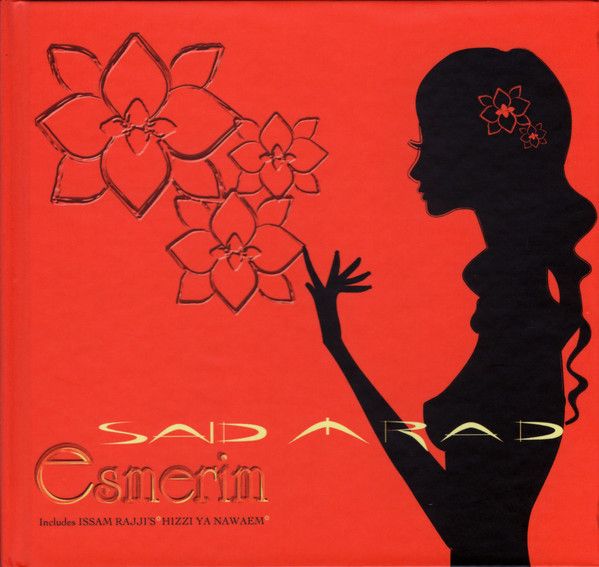

In 2006, Lebanese DJ Said Mrad, acclaimed as the “creator of Oriental beats,” took the song to another electronic peak. The first and last tracks on his album Esmerim (My Dark-Skinned Beauty) are both Mon Amour, although the album lists them under the title En Aranjuez con tu Amor —t he title used for the version of Aranjuez sung with Spanish lyrics. In fact, both tracks use the lyrics of Mon Amour, in both French and English, with only a few slight differences in the English wording.
The first track, En Aranjuez con tu Amor, is sung by Mirna Shaker, a Lebanese soprano who is also a doctor. Her voice, too, is heartbreakingly beautiful. Unlike Lord Vanger’s original, Said Mrad transforms the piece into something more atmospheric and dance-oriented, emphasizing rhythm, sound design, and emotional mood.
The final track, En Aranjuez Con Tu Amor (reggaeton mix), is remix with the Mirna Shaker’s vocal of the first track, but its arrangement is entirely different from that of the opening track. It moves from the relaxed feel of House to the more forceful pulse of reggaeton; its musical color also shifts from Middle Eastern mystery to South American passion.
Interestingly, seventeen years later, in 2023, Said Mrad remixed the song once again and invited Lebanese music producer and celebrated violinist Maher Salameh to join him. With the addition of this outstanding crossover violin, this version of Mon Amour does not rely on a powerful beat; instead, it becomes richer and more profound in its emotional shifts and changing moods. The new arrangement first appeared on YouTube in 2023, then received an official release on Apple Music, Spotify, and other streaming platforms in 2025. The complete track runs for 9 minutes and 20 seconds and is titled Mon Amour ft. Bruna & Maher Salameh Part 1&2. This time the title was corrected and the Spanish title was no longer used, although the subtitle from Lord Vanger’s version, “A Rose Under the Desert Sky,” was not included either.
Electronic arrangements of Aranjuez can be traced back at least to 1978 and Japanese electronic-music master Isao Tomita, whose album Kosmos contains a splendid performance lasting more than six minutes. Many other electronic versions followed. Yet the three albums and four versions introduced here form a lineage of their own: electronic music joined with bel canto in more than two decades of crossover and cross-cultural creation and recreation, arrangement and rearrangement. They are a distinctive case among the many adaptations of Aranjuez. Lebanese DJ Said Mrad alone created three entirely different mixes across nearly twenty years, and every one of them is moving. From the original interpretation on Esmerim in 2006 to the expanded versions of 2023 and 2025, the song gradually evolved from a compact electronic fusion track into a longer and more immersive sonic experience. These versions are more than a remix project. They show Said Mrad repeatedly exploring the same musical idea, allowing new arrangements, collaborators, and production techniques to reveal different sides of the work.
Electronic music is in fact highly developed in Lebanon and throughout the Middle East, with many festivals and performing groups. One Lebanese song that is known to virtually everyone and widely heard across much of the Middle East is Li Beirut (To Beirut). It is an adaptation of the Adagio from Aranjuez with Lebanese lyrics—a legendary song that is both beautiful and deeply moving. It too has been performed in many electronic forms and has appeared in electronic music countless times. This website has a dedicated section examining Li Beirut and other electronic arrangements of Aranjuez.
The albums and the various Aranjuez adaptations mentioned above are introduced first, followed by the artists and musicians involved. The lyrics of Mon Amour are introduced at the end.
Aranjuez Where Operatic Bel Canto Meets Electronic Music: “OPERATICA: SHINE” (2002)
Led by Lord Vanger, Operatica released its second album, Shine, in 2002. The album contains numerous adaptations of classical and world music, including works by Grieg, Bizet, Debussy, and other composers, as well as melodies derived from traditional Persian music. Lord Vanger also contributed original pieces, demonstrating his abilities as both composer and singer.

Lord Vanger, whose real name is Anthony Vanger, is a British-born music producer, composer, arranger, and singer. In 2000, he released his first album under the name Operatica, Operatica: ‘O,’ Vol. 1. This debut established his distinctive style, combining classical operatic arias such as the familiar Ave Maria and Vocalise with modern ambient electronic music, downtempo, and electronica, creating crossover styles such as Classical Crossover, Electronic Fusion, and Dance/Opera crossover. Operatica is not a band with a fixed membership in the traditional sense, but a musical project led by Lord Vanger. His second album, Shine, continued Operatica’s central concept by bringing the dramatic power of operatic female voices together with the modern rhythms of electronic music. Shine features several internationally renowned vocalists, including Inva Mula, Ying Huang, Maureen O’Flynn, and Shakila, all celebrated bel canto singers of their time.
Included on Shine, Mon Amour (A Rose Under the Desert Sky) reinterprets Aranjuez, Mon Amour —itself based on the second movement of Concierto de Aranjuez and sung with French lyrics—through a fusion of electronic rhythms and classical bel canto. Aranjuez, Mon Amour was the first vocal version of the Adagio from Aranjuez, a pioneering adaptation by Guy Bontempelli (1940–2014), a crossover artist active in French popular music and musical theatre. Vanger’s new version, however, borrows only the first and third sections of Bontempelli’s French lyrics to establish a romantic and sorrowful mood. As suggested by the song’s added English subtitle, “A Rose Under the Desert Sky,” its emotional climax lies in the new English lyrics that follow, written by Vanger himself.
* For a detailed introduction to Guy Bontempelli, see the section on the lyricist of “Aranjuez, mon amour” in this website’s Lyrics Library.
* I have transcribed the English lyrics as best I could and included them at the end of this article and in this website’s Lyrics Library.
Mon Amour (A Rose Under the Desert Sky) is performed by the internationally renowned soprano Inva Mula. Her deep operatic background allows this electronic crossover version to retain the dignity and emotional force of classical singing alongside its modern rhythms and tone colors.
Inva Mula (1963–) was born into a musical family in Tirana, Albania. Her father, Avni Mula, was a celebrated Albanian singer and composer. She received musical training from childhood and later studied voice at the Academy of Arts in Tirana. After moving to France in the late 1980s, she gradually established an international reputation on the opera stage. Inva Mula is known for the purity, agility, and dramatic quality of her voice. She has performed in major European opera houses, with a repertoire encompassing important works from the Italian, French, and German operatic traditions, and is one of today’s best-known lyric coloratura sopranos.

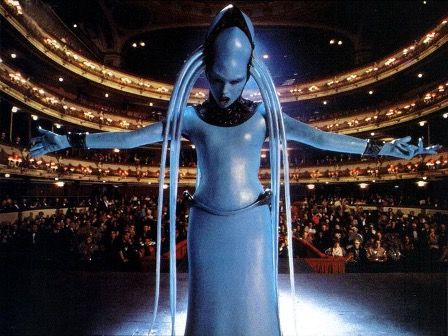
Beyond opera, the work for which Inva Mula is most widely known is her vocal recording for French director Luc Besson’s film The Fifth Element. The famous and extraordinarily demanding aria sung by the alien diva Diva Plavalaguna in the film was performed off-screen by Inva Mula. The perfect combination of her exceptional range and technique with electronic effects brought her voice to cinema audiences around the world. This may also have been one reason Lord Vanger chose Mula to perform Mon Amour. It is said that Lord Vanger had long wanted to create music combining classical opera with electronics. Then he saw The Fifth Element and realized that others had already begun experimenting in this direction. Mon Amour is regarded as the track on Shine that best unites classical opera and electronic music.
Operatica and Inva Mula’s Mon Amour carried the musical journey of the Adagio from Aranjuez—after classical music, jazz adaptations, and French chanson—into the electronic soundscape of the twenty-first century. Mon Amour was later included in the renowned lounge-music compilation Buddha-Bar V (2003), helping it circulate more widely in the global electronic crossover market. Operatica releases have sold more than 300,000 copies in total, and some of its works have appeared on the Billboard Dance Chart, the Crossover Chart, and the iTunes charts.
Aranjuez from Tribal House to Reggaeton: “Esmerim” (2006)
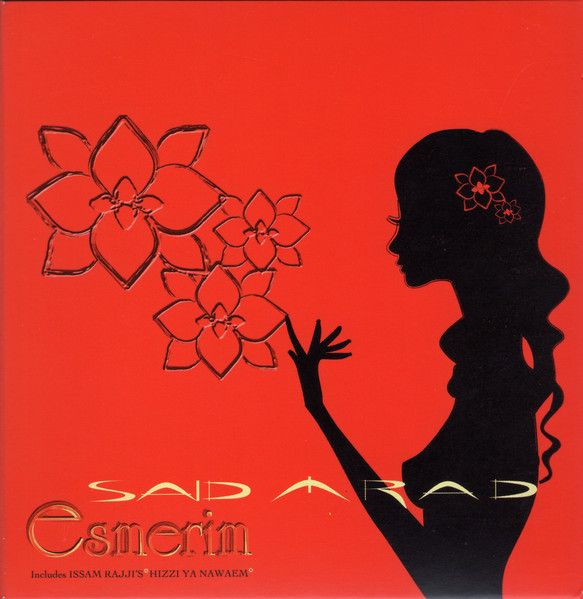
Esmerim is an electronic album released in 2006 by Lebanese DJ and music producer Said Mrad. Issued by Lebanon’s Music Master, its primary style is Electronic / Tribal House, blending Arabic music and world-music elements with the rhythms of House and electronic dance music.
Not “En Aranjuez Con Tu Amor,” but “Mon Amour (A Rose Under the Desert Sky)”
The album contains two songs adapted from the Adagio from Aranjuez, placed first and last, with different arrangements and performance styles. Although both tracks use the title of the Spanish song En Aranjuez Con Tu Amor, what is actually sung is not the Spanish version written by Alfredo García Segura, but Lord Vanger’s 2002 adaptation Mon Amour (A Rose Under the Desert Sky). This French-English version is adapted from the French song Aranjuez, Mon Amour, with lyrics by Guy Bontempelli. Lord Vanger preserves the poetic haze of parts of the original French lyrics, while adding heartbreaking English words and electronic rhythms that reach straight into the body and soul.
Mon Amour (A Rose Under the Desert Sky) is an outstanding interpretation among the vocal adaptations of the Adagio from Aranjuez, carrying it from the romantic narrative style of traditional French chanson into the world of twenty-first-century electronic dance music. Even in its original version on Shine, already featured vivid electronic textures with a world-music flavor, in Said’s version, the Middle Eastern musical character becomes still more pronounced.
DJ Said Mrad
According to his official website, Said Mrad has been acclaimed as “One of the Best DJ’s and the Guru of the Electronic Dance Music from the Middle East Region” and “The Creator of The Oriental Beats.” He is one of the important figures in promoting electronic dance music in the Middle East. He began working as a DJ in Lebanon’s nightclub scene in the 1990s. At a time when most DJs were simply playing Western popular music, he boldly combined traditional Arabic instruments with European and American House music. Said later developed into a music producer and has often performed in other Middle Eastern countries and across Europe. His distinctive Tribal House style, infused with world music, has led to frequent invitations to appear as a headline DJ for Hollywood celebrities and at major international music festivals. He has also been invited to collaborate with stars such as Martin (Ricky Martin) and Quincy Jones.
His work often combines Arabic melodies, exotic tone colors, dance beats, and club culture, creating a style of electronic music with a strong regional identity. His music serves the dance floor while preserving the melodic qualities of Middle Eastern musical culture. He has been shaping the defining features of Oriental Electronic Dance Music. Common elements in his work include traditional Arabic melodies, the timbres of Middle Eastern folk instruments, electronic drums and House rhythms, and Lounge and Chill-out atmospheres.
( Said Mrad official website https://saidmradofficial.com/biography/ https://saidmradofficial.com/biography/ )


Vocal: Mirna Shaker
The album credits identify the singer on the opening track as Mirna Shaker, but almost no information about this name can be found online. The reason is that when Arabic names are transliterated into English, hers is sometimes written as Mirna Chaker or Mirna Chaer; her personal website uses Mirna Chaker. (She is also sometimes known as Bruna or Burnis. Because I do not know Arabic, I was initially unable to verify whether these names referred to the same person. I later sent several emails to people connected with the recording and received a prompt and gracious reply from Said Mrad confirming that they are indeed the same person. My thanks to him!)
Mirna Shaker is a Lebanese soprano. She went to London, to study for a medical degree. While in Britain, she displayed an exceptional gift for bel canto and won a number of local singing and vocal competitions. Her talent even drew the admiration of British progressive-rock icon and world-music giant Peter Gabriel, founder of the renowned world-music label Real World Records. Even so, Shaker eventually returned to Lebanon, where she opened her own medical practice. She also used her vocal gifts in musical, religious, and charitable work, donating most of her income from performances and recording royalties.
Mirna’s singing combines the depth of classical opera with the delicate emotional expression of traditional Middle Eastern vocal styles. Her singing career has not focused mainly on popular music but on Lebanese and Western classical hymns. Crossover works between pop and electronic music, such as Mon Amour ,are relatively rare in her repertoire. Her diction in this song has an exotic charm. Her Western classical vocal training gives her upper register tremendous power and penetration, making its emotions even more resonat. In this recording, the quality and technique of her voice move from a smooth, flowing opening to soaring, almost aggressive high notes, then to soft murmurs of heartbreak and loss. You will surely want to hear more of her songs.
En Aranjuez Con Tu Amor (reggaeton mix)
One of the album’s bonus tracks—the fourteenth and final track—is titled En Aranjuez Con Tu Amor (reggaeton mix) and incorporates a much stronger Reggaeton pulse.
This track remixes Mirna Shaker’s original vocal recording from the opening song, but makes a dramatic leap in its underlying arrangement. The first track uses the four-beat motion of Tribal House: even and constantly driving forward, with a rushing, rolling sensation amid dense percussion. The fourteenth track instead adopts a Reggaeton rhythm, whose accents no longer fall evenly but have a much more pronounced stagger and swing.
The Tribal House rhythm of the former naturally makes you count “one, two, three, four,” as if your steps keep moving forward, beat after beat. The Reggaeton rhythm of the latter feels more like the body swaying with the music, with a clearly off-center pattern in the drums. Reggaeton uses more syncopation, and this rhythmic motion from Jamaica and Puerto Rico creates a fascinating beauty of contrast with the originally sorrowful Spanish classical melody. The Reggaeton version also occasionally mixes in calls from the DJ. Although I cannot understand what he is saying, the sound immediately evokes the live energy and improvisational atmosphere of a dance floor.
Overall, Said Mrad performs a kind of musical magic in this remix. He seamlessly brings together a Spanish classical melody, the Middle Eastern vocal style of a Lebanese singer, Latin American Reggaeton, and a male DJ voice. Even within Middle Eastern electronic music at the time, this must have been a relatively daring crossover experiment.
On the album Esmerim, Said Mrad places two versions of “Aranjuez” at opposite ends of the record and treats them with different mixing approaches. Beyond the sheer playfulness of the music, perhaps this also reflects his love for the piece. Seventeen years later, he remixed it once more in a longer version.
Expanded Organic House Version of “Mon Amour” (2025)

In April 2023, seventeen years after the release of Esmerim, Said posted Said Mrad ft. Maher Salameh - Mon Amour [Part 1 & 2] (2023) on YouTube. Then, in December 2025, he released it again as Mon Amour ft. Bruna & Maher Salameh Part 1&2. At the same time, it also appeared on Apple Music and Spotify.
The vocalist in the new mix is still Mirna Shaker, although Said calls her Bruna. Said’s MON AMOUR - MIX 1 - Esmerim Album, posted on SoundCloud around 2015, likewise states “released 2005 feat mirna shaker (bruna).” However, I believe the vocals here are likely using the vocal stem from 2006.
The new mix lasts 9 minutes and 20 seconds and is labeled Part 1&2. It can be divided roughly into two halves, although it is not really like an ordinary extended composite track in which the two parts have distinctly different dimensions of arrangement and emotional turns. The clearest difference between the two halves is that the first uses fragmented snippets of the vocal line to establish a somewhat mysterious atmosphere. After about 5 minutes and 35 seconds, nearly all the lyrics Bruna sang in 2006 are brought in line by line, though the instrumental passages and background rhythms have been newly varied.
The most distinctive feature of this version, of course, is Said’s invitation to leading Lebanese producer Maher Salameh to take part. Maher has been acclaimed as the Middle East’s foremost “Classical-Electro-Oriental Violin Cross-over Artist.” The addition of Maher’s outstanding crossover violin does more than add another instrument to the arrangement: throughout the piece, it enters into a continuing dialogue with Mirna’s voice, answering and echoing it. The electronic drums seem less strongly emphasized here, and the beat feels more spacious. Perhaps this is also why Said labels the track Organic House.
Since Rodrigo’s Concierto de Aranjuez was composed in 1939, the American jazz master Miles Davis had already adapted it in 1959 into a jazz piece led by trumpet. It remains a jazz classic today, and countless other adaptations have followed. Guy Bontempelli’s 1967 Aranjuez, Mon Amour, meanwhile, was the first version to be performed with lyrics. It has not only been covered continuously ever since, but has also been rearranged into numerous instrumental pieces.
The versions of Mon Amour introduced above grew out of Bontempelli’s adaptation Aranjuez, Mon Amour, added new English lyrics, and then underwent further arrangements and remixes in different styles. It is a fascinating case in the history of adaptations of the Adagio from Aranjuez, leaving behind a slender trace of musical culture in motion.
If Rodrigo created a garden within Spanish classical music,
Guy Bontempelli turned it into a French-language poem about love and memory.
Lord Vanger and Operatica then carried this garden into the electronic age.
And Said Mrad made it grow—and grow again—within Middle Eastern rhythms.
The musical ideas of these artists continued across a considerable span of time, yet they resemble the imagery in Bontempelli’s poetic lyrics:
My love, the rose bushes climb along the old traces, my love
Intertwining upon the wall, my love.
Their names were carved there, and every summer
The roses are a beautiful, vivid red.
The same melody continually changes its language, rhythm, and emotion in different musical and cultural settings, yet its essential sorrow and beauty always remain.
Lyrics of《Mon Amour ( A rose under the desert sky) 》
The lyrics for Lord Vanger's adaptation of "Mon Amour" incorporate the first and third verses from Bontempelli's "Aranjuez, Mon Amour," interspersed with original English lyrics.
Mon amour, sur l'eau des fontaines, mon amour
Où le vent les amène, mon amour
Le soir tombé, qu'on voit flotter
Des pétales de roses
Mon amour, le rosier suit les traces, mon amour
Sur le mur et enlace, mon amour
Leurs noms gravés et chaque été
D'un beau rouge sont les roses
Mon amour
What I meant to you, mon amour
Play like a sad and sweet melody in my heart
And every memory I cry, you’re my dear, mon amour
Mon amour, sur l'eau des fontaines, mon amour
Où le vent les amène, mon amour
Le soir tombé, qu'on voit flotter
Des pétales de roses
Mon amour
What I meant to you, mon amour
Play like a sad and sweet melody in my heart
And every memory I cry, you’re my dear, mon amour
Why you leave me standing, mon amour
Tears are running from the dark into my face into the sand
And every hour I wonder why
Our love had to die like a rose under the desert sky.
Mon amour, mon amour……
( The English passages are transcribed from the recording. Some phrases appear grammatically unconventional, but are preserved as heard. Several online lyric sources differ from the actual vocal performance. )
My love, upon the waters of the fountains, my love,
Where the wind carries them, my love,
As evening falls, we see them drifting—
Petals of roses.
My love, the rosebush follows the traces, my love,
Climbing the wall and twining round them, my love,
Their names engraved there; and every summer,
The roses bloom a beautiful red.
Mon amour
What I meant to you, mon amour
Play like a sad and sweet melody in my heart
And every memory I cry, you’re my dear, mon amour
My love, the rosebush follows the traces, my love,
Climbing the wall and twining round them, my love,
Their names engraved there; and every summer,
The roses bloom a beautiful red.
Mon amour
What I meant to you, mon amour
Play like a sad and sweet melody in my heart
And every memory I cry, you’re my dear, mon amour
Why you leave me standing, mon amour
Tears are running from the dark into my face into the sand
And every hour I wonder why
Our love had to die like a rose under the desert sky.
Mon amour, mon amour……
The catalog for the album *Operatica – Shine* lists G. Bontempelli as the arranger, Richard Anthony as the lyricist, and Lord Vanger as the author of the additional English lyrics. There appears to be a slight error here. Richard Anthony—credited as the lyricist—was actually the original vocalist who made "Aranjuez, mon amour" a hit; he performed the song countless times throughout his life, leading many sources to conflate the lyricist with the singer. In fact, Guy Bontempelli was responsible for both the musical arrangement and the lyrics of "Aranjuez, mon amour."


